Projects

General & Business English Courses

WhereWhenRole
MF HQ and Subsidiaries; General body of experts 2012-2016Head, designer, developer, and occasional executor

The primary objective of defining the English language training project in 2012 was the design, definition, and institutionalization of the educational structure for both business-specific and general English language programs within Sina Institute (as a reputable educational organization). The request of the Mostazafan Foundation to provide appropriate English language training programs for its staff and specialists served as a major driver for initiating and implementing this project.

The training program for the Foundation’s employees began with general and lower-level courses. A significant number of staff members across the Foundation Group underwent placement tests and oral interviews, after which they were classified into different levels ranging from beginner to mostly intermediate. These individuals participated in structured programs that gradually took shape, allowing them to improve their language skills.

Alongside these general courses, a series of specialized business English programs were also designed, primarily targeting the Foundation’s experts, managers, and specialists. These courses benefited from business-oriented instructors, including in some cases native English-speaking teachers.

In addition to these two main tracks, after several months from the project’s launch, advanced English courses were also developed. Mock IELTS tests were designed and administered, and a number of advanced classes were held for senior-level staff and employees who had successfully progressed through the learning pathway up to advanced levels.

Within this project:
a. The entire educational structure of both general and business English programs was designed by the Institute (and myself). This included the initial placement framework, the overall course structures, reference books, teacher qualifications, the academic framework of each term, supplementary resources, evaluations, exams, and more—all defined from scratch with a scientific approach inspired by best practices, both domestic and international.

Some selected books


b. Delivering quality language training required adequate physical infrastructure, which neither the Institute nor the Foundation had at the time. Infrastructure requirements were identified and defined, and facilities were implemented both within the Institute and in a dedicated building at the Foundation’s headquarter. Approximately 10 classrooms equipped with audiovisual tools and proper facilities were prepared during this project.
c. Sina Institute had no prior experience or structure for language training. At the start of the project, significant time and energy were invested in building the necessary academic framework, as well as identifying and recruiting instructors for both general and specialized courses.

Following the completion of the first phase of general and business English training for the Foundation, the groundwork was established for offering similar courses to other organizations. This model and framework were later implemented outside Sina Institute, under the newly established institution “Rasta,” to deliver several organizational programs, including at MCI (Hamrah Aval). Each new program required certain customizations and adjustments in processes and content, which were duly carried out.


From a personal perspective, this project can be evaluated as highly successful in both its design and implementation phases. It is true that there were occasionally significant challenges during the process, including the employer’s overly optimistic assumptions regarding the interest and attendance of staff from subsidiary units, delays in fulfilling financial and contractual commitments, and the lack of opportunity for some participants to dedicate the necessary effort due to workload and responsibilities. Nevertheless, both from a process standpoint and in terms of outcomes, the project exceeded its initial objectives; the only area where it fell short was in quantitatively covering the estimated number of learners.

Projects

Business School

WhereWhenRole
Mostazafan Foundation; Sina Institute2013-2015Head of the project

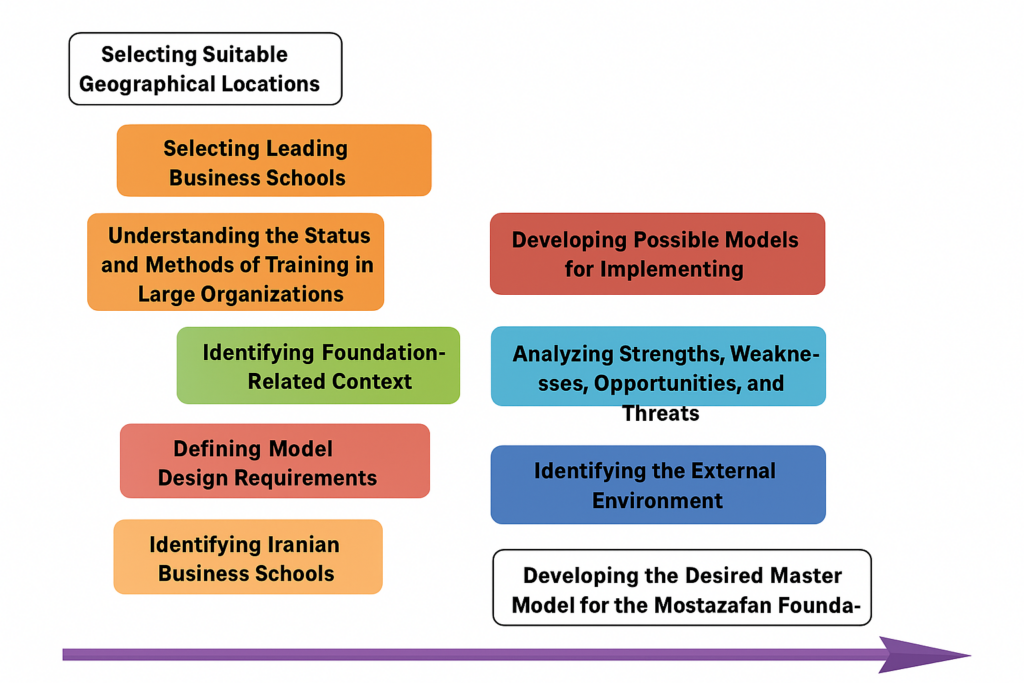
The macro project of Mostazafan Foundation Business School consisted of two main components. The first included operational educational projects, and the second focused on designing the Foundation’s Business School as one of the country’s key applied and operational educational institutions.

The first component comprised three specific initiatives, for which Sina Institute and I were responsible for some the processes: a. Designing and conducting various management courses; b. Collaborating with reputable domestic and international universities, such as the University of Tehran, Würzburg University in Germany, and a Swedish university, to train selected managers and experts of the Foundation; c. Collaborating with the Ministry of Science regarding doctoral scholarships in various fields (these individuals were expected to eventually work in the Foundation’s research institutes, Business School, or operational units).

The second component began with the research project titled “Designing the Foundation’s Business School” in 2013. The project was structured into three sections: executive research consultant, external supervisor, and overall guidance and supervision by the institute (my role).

The objectives of this research project were as follows:

  • Design a macro model of the Business School for Mostazafan Foundation.
  • Study and understand business schools and examine their characteristics in key regions of the world.
  • Review and study successful educational methods and approaches in leading business schools worldwide.
  • Examine and understand the nature of business schools in Iran and their development trajectory.
  • Identify and study the status (strengths and weaknesses) of the potential and existing business environment in Iran concerning business schools.
  • Review and study the nature and methods of education in large organizations.
  • Conduct comparative studies on the approaches of large organizations in establishing business schools.

During the research, five specific reports were fully prepared:

a. Report on understanding business schools and their characteristics worldwide: included explaining the philosophy of these schools, introduction of MBA and DBA programs, and a brief analysis of 54 universities and business schools globally.

b. Report on reviewing and studying successful educational methods and approaches in leading business schools worldwide: included examination and study of 18 reputable and successful universities and business schools regarding their soft and hard resources, core objectives and missions, organizational and educational structures and processes, course content and quality, related visuals for each center, and expert evaluations. The 18 universities examined in this report were: [list could be inserted].

University of Chicago – Booth School of BusinessUniversity of Cambridge – Judge Business SchoolMelbourne Business School – University of Melbourne (Australia)
Tuck School of Business – Dartmouth CollegeStrathclyde Business SchoolIndian Institute of Management (India)
Harvard Business SchoolBocconi School of Management (Italy)Nanyang Business School – Nanyang Technological University (Singapore)
HEC ParisGrenoble Graduate School of Business (France)International University of Japan – Graduate School of International Management
London Business SchoolVlerick Business School (Belgium)Yonsei Business School (Korea)
ESMT Berlin – European School of Management and Technology (Germany)The University of Hong Kong – Faculty of Business and EconomicsNUS Business School – National University of Singapore

c. Report on understanding the nature of business schools in Iran from inception to present: included explaining the history of business management programs in Iran, introducing and explaining the main aspects of universities and educational centers offering these programs, presenting findings from studies and field interviews with experts in the country, and identifying strengths and weaknesses, opportunities, and threats in this domain.

d. Report on external environment analysis: included developing a framework for studying the external environment at national, industry, and market levels, analyzing national environmental factors in four dimensions—political and legal, economic and financial, socio-cultural, and technological (educational methods and technologies), analyzing the industry environment (Ministry of Science level and existing business schools), and specifically examining e-learning as an emerging and significant approach in education that could profoundly affect the industry’s future.

e. Report on studying the nature and methods of education in large organizations: included explaining the concept of organizational learning, methods to improve organizational learning effectiveness, organizational universities and their dimensions, possible approaches and structures in such entities, and presenting results from studies of nine domestic and international organizational training centers, such as Motorola University, Disney, Trump, and Shahid Abbaspour Oil and Water & Power Training Centers.

It should be noted that structural upstream limitations and changes in the Foundation’s leadership hindered the progress of other phases of the first component and the executive actions of the second component. Consequently, the initially defined objectives of this project were almost entirely set aside during the new leadership period.

Projects

Socioeconomic Accelerator

WhereWhenRole
Tehran2015-2016
2017-Present
CEO, Concept developer

Rasta accelerator has been the central theme behind the establishment of the Rasta Institute for Management and Technology Development. This project was designed to focus on supporting, guiding, and developing innovative startups in the socio-economic domain. Its primary goal was to leverage the experiential, knowledge-based, and network capital of the institute to play an effective role in the advancement and improvement of various social sectors in the country.

The Rasta Accelerator, like other acceleration centers, followed a similar overall process, including identifying talented individuals, evaluating business ideas, providing initial financial and infrastructural support, offering consultancy and training, fostering business development, networking, and facilitating the secondary growth of startups.

More specifically, the defined services of the accelerator included:

  • Providing targeted seed funding for the formation and early-stage development of startups.
  • Offering business, legal, marketing, and management consulting services to facilitate business implementation.
  • Sharing rich entrepreneurial experiences through mentorship and interactive workshops.
  • Delivering business and leadership training programs.
  • Facilitating investment attraction for future business growth.
  • Providing office space and administrative facilities.
  • Market development and establishing necessary connections to facilitate business operations and future expansions.
  • Offering post-acceleration support after startups exit the acceleration process.

After the complete design and initial structuring phase, the project was halted during the admission process of the first specialized teams due to the approach of the partners and their failure to fulfill commitments. Subsequently, the Rasta Accelerator’s focus was revised and adjusted, continuing under the Rastup brand to support and nurture small-scale innovative ideas. This initiative has remained active and has primarily evolved into a startup studio model.

Please visit the Rastup community, and if you have a suitable idea and technical expertise, please complete the collaboration form.

Projects

Organizational Project Management

WhereWhenRole
Arvand Free Zone (Org.)2016-2017Head of the project

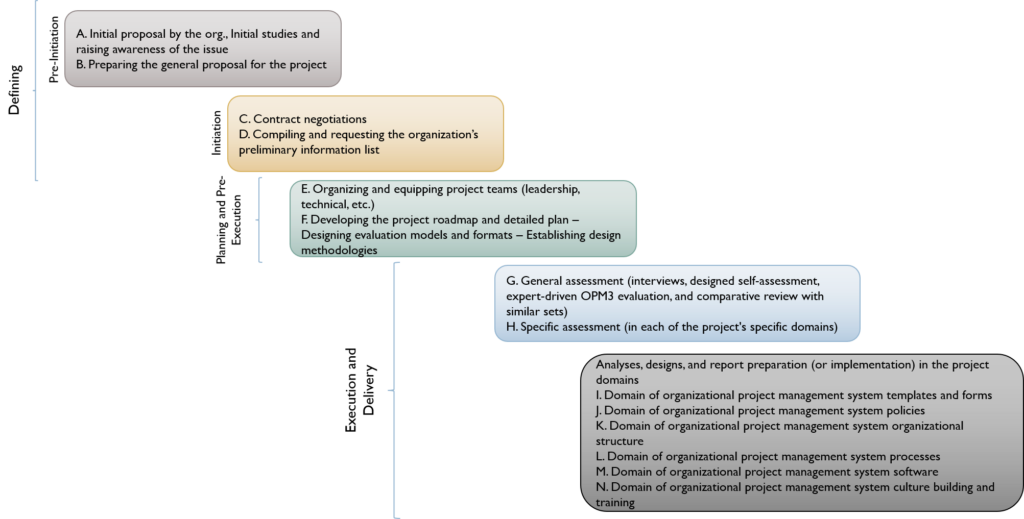
The process of defining and delivering the outputs of the “Organizational Project Management System” in the Arvand Free Zone Organization was structured and executed in three main phases. This structured approach ensured a seamless transition from initial discussions to final delivery, aligning with the organization’s strategic objectives and operational requirements.

The defining phase contained two steps:

The pre-initiation step which primarily focused on activities before contract execution and included two key components:

  1. Initial negotiations and meetings to gain a comprehensive understanding of the project’s subject and scope.
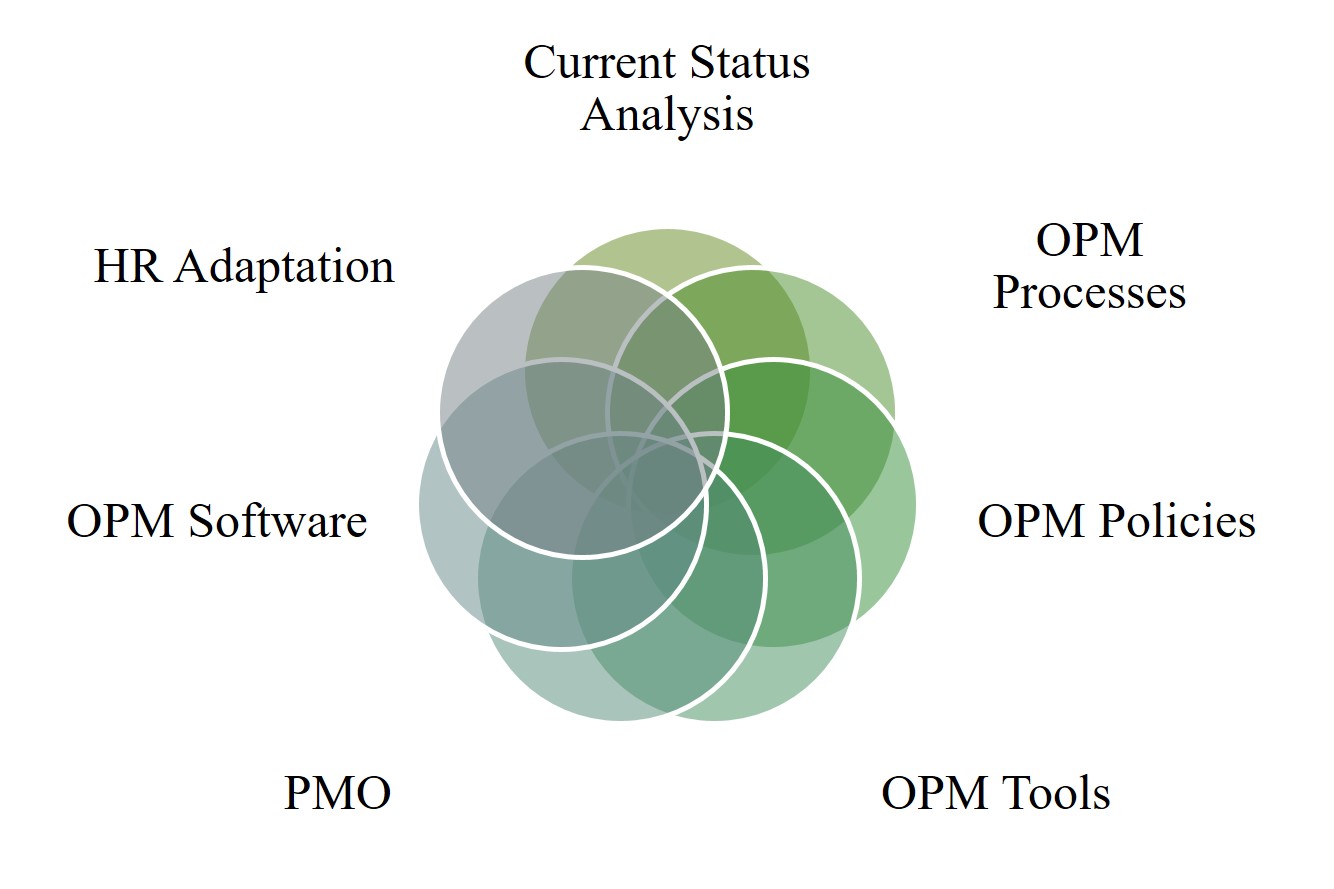
  2. Development of the project proposal, which broadly outlined six key operational areas relevant to the project.

The initiation step, that following the employer’s initial approval of the proposal, contractual negotiations were pursued. Simultaneously, based on prior experiences and the initial understanding of the employer’s organization (and the defined project), efforts were made to define and organize a set of fundamental informational categories. This structured information served as a foundation for collecting and providing essential data about the organization and the project’s domain.

The planning and pre-execution phase encompassed several key actions:

  • Developing a detailed project plan, including tasks, timelines, and sub-processes.
  • Structuring and equipping project teams, comprising three core groups: leadership, scientific, and operational teams.
  • Drafting methodologies, templates, and specialized forms necessary for project execution, prepared either before or during the implementation phase as needed.

The execution and delivery phase consisted of two interconnected sub-phases:

  1. Assessing the organization, its project management system, strengths, weaknesses, and other relevant general and specialized aspects.
  2. Conducting analyses, designing solutions, preparing reports, and implementing necessary components across various project domains, including templates and forms, policies, organizational structure, processes, software, and training programs for project management system adoption within the employer’s organization.